vikings made their woman handle the finances because they thought math is witchcraft
During a military campaign, Vlad the Impaler, the basis for Dracula, once pulled his troops out of a major engagement in a valley at dusk so that the sun was in their enemies’ eyes. Once they were over the hill, they set loose a bunch of rabid bats who flew away from the sun (towards the enemy) and attacked them, leading to significant infection in their ranks, and Vlad’s eventual victory. Because of how the bats appeared from where Vlad’s soldiers appeared to be at dusk, myth stated that the soldiers turned into bats at night, which is where the “Dracula can change into a bat” thing came from.
raphael, the renaissance painter, literally fucked himself to death
during the Ottoman Empire, the Sultan Ibrahim I had 280 of his concubines drowned in the ocean after ONE of them slept with another man.
The earths carbon levels fell by 700 million tons because Genghis Khan killed so many people
King James (the one known for revising the Bible) liked to watch women give birth. That’s where the “tradition” of women laying on their backs to give birth comes from.
Previous to that it was common for women to have chairs with holes in them and straw underneath, so they could sit on this special chair and let gravity help with the birthing process.
Spicy foods were thought to increase libido and cause children to masturbate. To prevent kids from touching themselves at night, a man named Kellogg invented the blandest combination of cereals, marketed it at kids, and called it Corn Flakes
At the Battle of Gettysburg during the American Civil War, a small group of Union soldiers had run out of ammo against a large group of the Confederate Army. In a panic, the Union soldiers sprinted at them, screaming, with only bayonets drawn. The entire Confederate Army that was present turned and ran away in fear, not knowing that they had literally no ammunition.
When the Roman Emperor Caligula went to invade Britain he stood on the coast of Gaul with his army and suddenly declared war on Neptune, God of the Sea. He had his men collect sea shells from the shore as “spoils from the Ocean”.
Oh and he appointed his horse to the senate.
During the Austro-Prussian war of 1868, Liechtenstein sent over an army of 80 people, but ended up coming back with 81 people because they befriended a guy on the other side.
People refused to send art and sculptures to be displayed at the Chicago World’s Fair because of Chicago’s history with fire. They had to fireproof the Fine Arts building to get people to agree to loan them their art. A year after the fair closed most of the grounds were destroyed by fire but the Fine Arts building survived. It’s now the Museum of Science and Industry.
The carbon emissions thing from Ghenghis Khan is not the whole story. He also planted trees wherever he conquered land because he liked trees and thought they were important. He conquered enough to make an impact on the global climate.
Radu III, brother of Vlad III( Vlad the Impaler) nearly killed Mehmed II, the future Sultan of the Ottoman’s, after Mehmed invited him up to his chambers. Radu, seemingly unaware that the offer was sexual in nature, was startled when Mehmed embraced and then tried to kiss him. Radu stabbed the prince in the leg, then ran and hid in a tree. They later became lovers, and maintained a relationship for the rest of their lives
Just googled the last one because holy shit that’s magnificent and seemed to good to be true, but not only did it actually happen, but I also learned that radu was known as “radu the beautiful”
fun date idea: stab him in the leg
Albert Einstein was such s hard believer on civil rights during his time that the us government made the cia I watch everything he did. Because they believed he was communist spy from Russia for believing in civil rights.
Roman Emperor Nero fancied himself a gifted composer, and would crucify Christians and set them on fire so that their screams would inspire his musical compositions. When he killed himself, his final words were something along the lines of “the world is losing possibly its greatest musical genius of all time”
How has NO ONE questioned Raphael fucking himself to death?
In 1338, Black Agnes – the 28-ish year old Countess of Dunbar and March – held Dunbar castle against an English siege. After the English forces used catapults against the castle, Agnes sent out one of her maids to dust the rubble off the ramparts with a handkerchief. She also almost managed to capture Salisbury, the leader of the English force, in a trap and only failed because one of his men stumbled into it first. She made sure to give Salisbury a good taunting after that. He ran off with his tail between his legs after 5 months and the whole embarrassing affair cost the English crown thousands of pounds.
Britain’s practice of transporting convicts to American colonies was a
fearsome punishment, but not for the chronic criminal James Dalton.
The year was 1721. The ship was called the Prince Royal, its destination the American colonies. And the cake—the cake was gingerbread.
The British crew shouldn’t have been surprised to find the metal file
in the cake. Its stasher, James Dalton—a notorious thief and escape
artist—had been shuttled involuntarily between Britain and America more
times than a trans-Atlantic diplomat. Unluckily for Dalton, this
particular mutiny fell apart as soon as the cake did. Luckily for
Dalton, there would always be a next time. After all, as a convict who’d
been sentenced to the punishment of “transportation” multiple times,
Dalton had mutinied before.
While conditions in 18th-century British prisons could be horrific (more
convicts died in prisons than at the gallows), the most feared
punishment didn’t take place in prison at all. Between 1718 and 1776,
British authorities exiled approximately 50,000 convicts to American
colonies in a policy euphemistically known as “transportation.” Once in
America, the convicts fell under a life of servitude or outright
slavery, underfed and overworked. They had to obey their masters or risk
being imprisoned, with punishment including whippings. In the early
period of transportation, half of these prisoners died while in bondage.
Unsurprisingly, the policy of transportation wasn’t so popular among
British convicts. Some prisoners even begged to be executed rather than
shipped abroad. Thus, plenty of prisoners sentenced to transportation
attempted to escape partway through the journey. Multiple
convict-carrying ships bound for America suffered prisoner rebellions.
Rather than heading to remote parts of the colonies upon arrival, most
escaped convicts preferred to sneak back to Britain, despite being
subject to execution for the meta-crime of returning from
transportation.
James Dalton was one such convict. He grew up surrounded by crime and
punishment; his father cheated in gambling, and his mother and sister
were transported for criminal activity. When Dalton was five years old,
his father was executed for robbery—and in an awkward bit of father-son
bonding, he smuggled young James into the execution site in the cart
that was transporting him to the gallows, so that the boy could watch.
Dalton’s own criminal career started at the age of eleven, and according
to his later prison memoir this involved an impressively diverse range
of misdeeds such as stealing “a parcel of wet Linnen hanging to dry in
the Garden” and toys from a toy shop. He ran a London street gang and
called himself “one of the most impudent irreclaimable Thieves that ever
was in England.” The proceeds from such thefts generally went toward
the company of prostitutes. (Dalton’s inveterate womanizing would also
ultimately land him in hot water.)
Belying the saying about honor among thieves, Dalton stole from his
accomplices, and all testified against each other when caught by the
authorities. After one of his former comrades-in-thieving-and-whoring
gave Dalton up, he was sentenced to the dreaded transportation.
In May 1720, Dalton was put on board the (ironically named) Honour,
bound for Virginia. The felons aboard the ship consisted of 36 men and
20 women. They outnumbered the crew of 12, led by Captain Langley.
Oceanic crossings were prone to severe gusts. “One Day when we were
at Sea,” Dalton would later write, “a Gale of Wind arose that blew very
hard, and carried away our Main-Top-Mast.” Twelve of the men—including
Dalton—agreed to help with the repairs on deck and had their chains
removed. The first mate made Dalton steward of the prisoners. Dalton was
keenly aware of the provisions brought on board by a fellow prisoner,
Hescot: “about fifty Pound of Bisket, two Caggs of Geneva [gin], a
Cheese and some Butter.” Dalton and his prisoner buddies proceeded to
take the food and liquor for themselves. Hescot complained to Captain
Langley, who threatened to whip all of the prisoners to find the
culprit. But before he could do so, Dalton gave the prearranged signal.
He and 14 other felons seized the ship’s weapons, immobilized the 12
crew members, and took control of the vessel.
As mutinies go, it was a relatively civilized one. One prisoner who
had refused to go along with the uprising changed his mind once the
mutiny was complete. Dalton and his co-conspirators granted the turncoat
his freedom in exchange for £10. They even provided him with a receipt.
The mutineers held control for 14 days. Near Cape Finisterre, Spain,
the mutineers relieved the captain and first mate of their watches,
money, and other possessions, amounting to about £100 in value. They
compelled sailors to bring the long boat around. Then the merry
mutineers shared drinks with the captain and first mate before setting
them free. Dalton and his accomplices made off in the long boat and
reached the Spanish coast in just a few hours.
From Spain, the escapees headed to Portugal. Dalton and eight others
boarded a Dutch man-of-war bound for Amsterdam, where Dalton committed
robberies to get back into the swing of things. When he was sufficiently
swung, he returned to England. There, he saved enough money from his
robberies to marry a wheelbarrow pusher named Mary Tomlin.
However, his line of business caused marital discord. Dalton left his
wife to live with another woman—who reported to the authorities that he
had returned from transportation. He was detained and brought to
Newgate prison under the Transportation Act, where he was tried with
other mutineers. All were found guilty and sentenced to death. Their
sentences were later commuted to transportation to America for 14
years.
In August 1721, Dalton set sail with the other passengers of the Prince Royal.
He had rebellion on his mind again, as demonstrated by a gingerbread
cake in his possession that happened to break apart while the convicts
boarded. The guards discovered that there was not just cakey goodness
inside, but also a file—an early version of the cartoon trope of
prisoners breaking out using weapons baked into cakes. Following the
foiling of the filing, the crew tied Dalton up and watched him
carefully.
This time, Dalton made it to the other side of the Atlantic. But he
didn’t stay put for long. Dalton embarked on a cycle of running away,
living on foods such as venison and moss, getting caught, running away
again, selling horses or slaves, making it back to England, and getting
transported—again. While in America, Dalton’s relationships with his
masters were never very conciliatory, likely because of his reluctance
to treat them as masters. At one point, he noted, “when my Master bid me
go to work, I told him Work was intended for Horses and not for
Christians.”
Dalton even took one of these trans-Atlantic trips willingly. When
facing a charge of returning from transportation, he turned informant on
six of his former accomplices to get himself off the hook. While freed,
he lived in fear of retaliation by the widows of the former
accomplices, whose husbands had been hanged based on his testimony.
Thus, using the £40 the government had paid him for his assistance, he
chose to travel to Virginia for a period while things in London cooled
down.
However, he came to the end that befell most convicts who resisted
transportation. Back in Britain, he was put on trial for the highway
robbery of John Waller. Dalton denied committing the crime, though he
admitted to an abundance of others. He considered Waller a liar and a
chronic snitch; Waller was as profuse in testifying against criminal
suspects as Dalton was in relieving people of their property.
Although Dalton swore his innocence to the end, he was reported to be
“very cheerful” on his way to his execution. In 1730, ten years after
he was first sentenced to transportation, Dalton’s body was finally
transported underground—via the hangman’s noose.
Two years later, Waller was convicted of perjury, again for an
accusation of highway robbery. He was pilloried in a public spot. While
he stood bent over with head and hands trapped in the wooden pillory,
his brother Edward beat him to death.
As a criminal, Dalton had nine lives. He essentially bullied his
masters, refused to work, and engineered more felonious exploits in
America. He didn’t die on board multiple ship journeys and he wasn’t
immediately executed upon returning to England.
And he was also clearly successful with the ladies. Dalton was as
prolific a husband as he was a thief; four of his ex-wives came to see
him during one of his stints at Newgate prison, and appeared to be on
good terms with each other. At least one of these marriages was strictly
business, as she was pregnant and her family paid him to marry her.
As for the practice of transportation to America, it ended with the
American Revolution. The pesky Americans’ demands for independence
caused Britain to stop sending its convicts to America and to force them
to Australia instead. The Australian convict trade wound up about three
times as large as the American version.
The smaller scale is just one reason that U.S. history overlooked the
fact that some of its long-lineage East Coasters are presumably
descended from convicts. Patriotic 19th-century historians asserted the
practice was less common than it actually was. Showing that American
politicians’ massaging of facts has a long and illustrious history,
Thomas Jefferson claimed in “Notes on the State of Virginia” that the
number of convicts sent to America as just four percent of the actual
figure, and that these people were thankfully kept out of the American
gene pool: “I do not think the whole number sent would amount to 2000
& being principally men eaten up with disease, they married seldom
& propagated little.”
In Dalton’s case, he certainly stayed true to his path. He achieved a
sort of rascally notoriety toward the end of his life with the
publication of his memoirs, and his family history led a prison chaplain
to later say of Dalton, “One may easily conjecture what Sort of a Tree
grows from such a Stock.” Dalton did little to dissuade anyone, much
less history, of that conjecture.
My references are as follows: the literal sugarcane that is growing behind them in the following two gifs:
See the guy with the machete behind Thomas in the second one, cutting down canes? See the piles of the stuff lying in the cart? Now, here’s a picture of actual sugar cane:
Also, here is a section of a book discussing how the British tried to set up sugar plantations in Georgia and failed – this is right around the right time for them to have been doing that:
I was at work today for Labour Day and on TV was Good Morning America. The theme was celebrating the American worker and their accomplishments. I’ll tell you how it went down.
Kelly put on her glasses, smile wide, and pulled out a piece of paper which she read from. The paper was from an article
(which I have issues with, but I will leave alone for now) by ABC news. Kelly proceeded only to read the opening of it, which reads: ‘Americans work more than anyone in the industrialized world. More than the English, more than the French, way more than the Germans or Norwegians. Even, recently, more than the Japanese. And Americans take less vacation, work longer days, and retire later, too.’
And everyone cheered.
And they kept cheering when Kelly put her paper down and smiled at everyone. (not continuing with the rest of the article which suggests that this may in fact be a problem).
And I just couldn’t BELIEVE that anyone was cheering. America. AMERICA you work more than the French, who are entitled by law to have 5 weeks off a year for vacation and can not work more than 35 hours per week. You work more than Norway, who average 33 hours per week and 44,000 dollars a year. Germany, where AGAIN, we see a shorter work week and better pay! And all of these countries have health care and better pay and free/affordable education!
WHY ARE YOU CHEERING?
I have a different interpretation of this information: the American worker is the most taken advantage of worker in the industrialized world. It’s plain and simple. You work long hours and get horrible pay. You take multiple jobs and work and work and work just to get by. Unions are disappearing, jobs are always looking for part timers and all you are doing is giving up your time for less money, less vacation, less safety and stability and less education than anyone else on the list.
Celebrate Labour day. Celebrate the accomplishments of the common worker, but don’t let these people trick you into thinking you should celebrate the theft of your time and energy, or the fruits of your labour.
They are using you. Stop cheering.
Ok, so I always wondered why y’all commemorate Labour Day September instead of May 1st like the rest of the world. After this post I finally decided to google it. This is a very quick overview of what I found and I’m 100% sure there’s people out there that know more about the subject.
Basically it’s all because of President Grover Cleveland. May 1st is commemorated worldwide because of the Haymarket affair,May 1st 1886. The Haymarket affair was an almost country wide strike of union workers demanding an 8hour work day. The protest extended and on may 4th police fought back in Chicago, trying to disperse the protesters from public assembly, which resulted in hundreds of civilian deaths, death of 8 policemen and injuring tens more. As a result Hundreds of labour leaders were round up and four were publicly executed. May 5th in Milwaukee, state militia attacked another group of strikers. In 1887, Oregon was the first state to recognize Labor Day. The May 1 date was established in 1889 a Paris meeting of the Socialist International declared May 1 as an annual event. (Which is now commemorated as International Worker’s Day) By 1894, most states had recognized Labor Day on May 1st as a state holiday, however it had not yet passed federal legislation. That’s when the drastic chain of events happened: the Pullman Strike May 11, 1894. Pullman Chicago was pretty much an industrial city. Pullman Company was a big Luxury rail car manufacturer in town. Their workers lived in housing built and managed by the company and shopped in shops managed by the company too. The economic crisis of 1890s cause many companies, including Pullman, to lower costs by lowering workers’ salaries. They did not however lower the cost of living for their workers. Workers went on strike to protest the low wages, high prices and lack of political fairness in their company owned town. The ARU (one of the biggest Railroad worker unions) tried negotiations which Pullman refused, so they called for the boycott of any train that had Pullman cars. The boycott has been said to have involved 250,000 workers and affected the railroad systems of 27 states, especially west of Detroit. The Railroad Brotherhood and the AFL opposed the boycott. Thirty people were killed in response to riots and sabotage that caused $80 million in damages. The federal government ordered the ARU to stop boycotting mail carrier trains, but the union refused. Here’s where it gets interesting: President Cleveland ordered in the Army to stop the strikers from obstructing the trains. Cleveland Declared Labor Day first Monday of September a federal holiday, to appease his constituents after the controversial handling of the strike which lead to so much damage. He did refuse to recognize it on May 1st, since he was concerned that would encourage Haymarket-style protests and would strengthen socialist and anarchist movements, especially because it had been recognized by the rest of the industrialized world as International Worker’s Day.
Labor Day on the first Monday of September exists to eclipse both the Pullman Strike and the Haymarket Strike. Labor Day on the first Monday of September has sales to make you forget about worker’s rights. International Workers Day on May 1st exists to remind you of them. Labor Day on the first Monday of September is a Capitalist and political move. Always observe May 1st guys.
Let’s say you’re looking to buy a house and you’re searching through a certain real estate website (ahem). You see a beautiful rowhouse for sale and it’s exactly what you’re looking for. You ask the seller for more information but she doesn’t really know anything about its history.
Of course, that’s not a problem because you read McMansion Hell and so you already know the house’s age and what kind of people used to live there.
In Part I of this series, we looked at the development of rowhouses from the exterior and why they are so successful. This week, we’ll examine interiors and how you can identify the different types of rowhouses when observing them in their natural environment. Your friends will be amazed!
What kind of rowhouse is it?
Because of the immense adaptability of rowhouse design, several parallel modes of categorization and identification could be employed. The most common system is to identify the rowhouse based on the architectural style of its ornament. This has some advantages because style is relatively easy to identify and helps to approximate the age of the house.
Common 19th century architectural styles and decades of construction. [Drawing by the author based on an original by The Old House Journal]
However, architectural style alone is somewhat limiting as an identifier because rowhouses are defined by certain structural elements such as size and roof type. Facade material is also very important when categorizing rowhouses. This is particularly true for rowhouses covered with brown sandstone or “brownstone.”
This type of facade is so common that the term “brownstone” has become yet another synonymous word for rowhouse– even those without brownstone on the facade. Finally, regional variations on the rowhouse have meant that individual cities display rowhouses with characteristics specific to that city, thus creating yet another potential system of taxonomy.
Taking all this together, I’ve arrived at a handy chart to combine these 4 systems of categorization. When describing and identifying a rowhouse, each column in the chart could be used independently or together with one or more of the other columns:
For the purposes of this article, we will focus on the interiors of rowhouses by looking at what floor plans can tell us about the age of rowhouses and the people who lived in them.
Floor Plans
As has been discussed in an earlier edition of “Looking Around,” floor plans are often a better way of categorizing vernacular architecture than trying to identify the style of the ornament.
When it comes to rowhouses built before 1915, there are essentially two different basic types of floor plans- those with a front hall and those without a front hall. Within these two types, there exist dozens of variations but they all come back to the hall as a distinguishing characteristic.
Front hall at 4 Grove Street, New York, NY (Built circa 1829) [Source: Historic American Buildings Survey, Survey No. NY-449, Public Domain]
A seemingly simple and narrow space, the hall serves multiple roles. Architecturally, it provides a passage so that inhabitants do not need to cross through intermediary rooms while moving to different parts of the house. Due to the narrowness of rowhouses, horizontal space is at a premium and lateral movement is a luxury. The hall allows for lateral movement with maximum efficiency of space.It also allows for a straight staircase, thus allowing for more visually appealing stairs that are also physically safer to use than those that wrap around.
In the 19th century, the hall additionally served the very important social function of intermediary space between the outside world and the domestic interior. The hall was the first thing that visitors would see upon entering the house and so it was often impressively decorated with architectural features and furniture. The hall was the place where visitors could be kept while waiting to be admitted to the inner portions of the home. This provided privacy for the inhabitants and later reinforced conservative Victorian ideas about formality and familiarity.
Therefore, the hall represents a division between sophisticated designs and more basic ones. Not surprisingly then, the presence of a hall (and its size) signifies the relative wealth of the rowhouse’s original inhabitants. You know what they say about people with big halls, right?
Exterior of 4-10 Grove Street, New York, NY, built c. 1829, as it appeared in 1936 [Source: Historic American Buildings Survey, Survey No. NY-449, Public Domain]
A good example of a rowhouse hall can be found at 4 Grove Street in Manhattan, built circa 1829. Typical of rowhouses of this period, the first floor is divided between a “front parlor” and a “back parlor” with the hall running along both. During the Victorian period, both parlors were used for entertaining guests. The front parlor later became what we call today the living room while the back parlor later assumed the role of dining room. Bedrooms on the second floor follow a similar layout.
Interior of 4 Grove Street. [Source: Historic American Buildings Survey, Survey No. NY-449, Public Domain]
In the floorplan above, note the placement of the hall in relation to the other rooms. It allows someone to move front to back and side to side within the house while maintaining a reasonable width for the main living spaces. You’ll notice that the kitchen and dining room were placed in the basement for maximum space efficiency. Fans of “Downton Abbey” know that among wealthier households, putting the kitchen in the basement was also a convenient way of hiding servants and their workspace out of sight. In many upper class homes, a second, smaller staircase known as a “servant’s stair” allowed for the discrete movement of servants between floors.
Naturally, rowhouses for the working class were smaller than their more affluent counterparts. Among these smaller rowhouses, the reduced size of the overall plan necessitated reducing the size of the hall or eliminating it altogether. Without domestic servants, working class homes also moved the kitchen out of the basement and into an extension on the rear. This new location on the back of the house was as much for convenience as it was for fire safety. Keeping flames segregated to the back of the house made fires easier to contain should they break out.
Early 19th Century Working Class Rowhouses and Floor Plans [Source: Historic American Buildings Survey, No. MD-932, Public Domain]
The example on the left depicts a very common floor plan for a working class rowhouse. The front entrance opens directly into the front parlor (or living room) which then had to be crossed to enter into the back parlor, or dining room. A small winding staircase is tucked into a closet and the kitchen sits in an extension on the rear.
The rowhouse on the right demonstrates an intermediary design. The exterior has three stories, thus signifying a more affluent original owner, but is not as wide as upper class homes like 4 Grove Street. The middling character of the exterior also extends to the floor plan on the interior. By the addition of a wall through the front parlor, the front door opens into a “quasi-hall.” This sort of half hall does not extend far enough to accommodate a straight staircase, but does provide some additional privacy. As with the example on the left, a third room in the rear of the house accommodates the kitchen resulting in a floor plan that is 1 room wide by 3 rooms deep.
By the late 19th century, almost all rowhouses followed this “1 x 3” pattern in some form. Therefore, other than size, the distinguishing feature between wealthier homes and modest ones was the presence or absence of a hall.
This floor plan of a Baltimore rowhouse is very typical of most working class rowhouses built from the end of the Civil War up to about 1915.This example was located at the end of the row so it was better lit than its neighbors, and therefore more expensive. The center room on the first floor was commonly used as a dining room. Porches, like the one seen here, began to appear in the 1870s and became increasingly common by 1900. In lieu of a hall, they took the role of intermediary space between indoors and outdoors. [Source: Historic American Buildings Survey, No. MD-1005, Public Domain]
The big problem with the “1 x 3” design is that it creates a “center room” in between the living room and the kitchen. This room is relatively dark and poorly ventilated compared to the other rooms in the house. After about 1915, this design was improved by rowhouse builders in response to growing market competition from outer suburban detached houses. By widening the house and creating a “2 x 2” floor plan where the kitchen was brought parallel with the center room, all rooms received an equal distribution of light and fresh air. The new floorplan also allowed for equal lateral and longitudinal movement throughout the house. This style of rowhouse became known as the “daylight rowhouse” and was a popular middle class housing type up until about 1930.
Built from 1915 up until the Great Depression, the “Daylight Rowhouse” represents a major advancement in rowhouse design. The addition of skylights over the stairway added additional natural light. Drawing by the author.
House construction pretty much ceased during the Great Depression, and rowhouses had fallen out of style once building picked up again after World War II. Consequently, there aren’t very many examples of rowhouses constructed between 1930 and 1990. Today, new rowhouses or townhouses are similar to older models in their appearance. Contemporary rowhouses tend to be a little bigger and a little taller to accommodate a garage on the ground level. The one major change to the rowhouse floor plan has been the introduction of the “open floor plan” where most interior walls on the first floor have been removed entirely. The living room bleeds into the dining room, which bleeds into the kitchen.
The popularity of the open floor plan has resulted in the removal of interior walls from many older rowhouses. If you find yourself in an old rowhouse with an open floor plan, then that means someone removed the original walls fairly recently. But if you are in a rowhouse with walls, then pay attention to how they are arranged because they can tell you a lot about the house’s history and who was there before you.
About the Author
Jackson Gilman-Forlini is a historic preservationist for the Baltimore City Department of General Services, where he coordinates the Historic Properties Program. He is a Masters candidate in Historic Preservation at Goucher College and can be reached at jgilmanforlini@gmail.com
[Editor’s Note: That’s it for this installation of Looking Around! Next week: a New Hampshire McMansion and a primer on common architectural details. Special round of applause for Jackson for sharing his expertise on rowhouses, something I admittedly know much, much less about. Have a great week, everyone!]
A discovery made in a remote mountain village high in the Peruvian Andes suggests that the ancient Inca used accounting devices made of knotted, colored strings for more than accounting.
The devices, called khipus (pronounced kee-poos), used combinations of knots to represent numbers and were used to inventory stores of corn, beans, and other provisions. Spanish accounts from colonial times claim that Inca khipus also encoded history, biographies, and letters, but researchers have yet to decipher any non-numerical meaning in the chords and knots.
Now a pair of khipus protected by Andean elders since colonial times may offer fresh clues for understanding how more elaborate versions of the devices could have stored and relayed information.
Anthropologist Sabine Hyland studies a khipu board, a colonial-era invention that incorporated earlier Inca technology.
“What we found is a series of complex color combinations between the chords,” says Sabine Hyland, professor of anthropology at St. Andrews University in Scotland and a National Geographic Explorer. “The chords have 14 different colors that allow for 95 unique chord patterns. That number is within the range of symbols in logosyllabic writing systems.”
Hyland theorizes that specific combinations of colored strings and knots may have represented syllables or words. Her analysis of the khipus appears in the journal Current Anthropology.
SECRET MESSAGES
Hyland made her discovery in the Andean village of San Juan de Collata when village elders invited her to study two khipus the community has carefully preserved for generations. Village leaders said the khipus were “narrative epistles about warfare created by local chiefs,” Hyland reports.
The khipus were stored in a wooden box that until recently was kept secret from outsiders. In addition to the khipus, the box contained dozens of letters dating to the 17th and 18th centuries. Most of the documents are official correspondence between village leaders and the Spanish colonial government concerning land rights.
Spanish chroniclers noted that Inca runners carried khipus as letters, and evidence suggests that the Inca composed khipu letters to ensure secrecy during rebellions against the Spanish, according to Hyland.
A khipu from the Andean village of San Juan de Collata may contain information about the village’s history.
“The Collata khipus are the first khipus ever reliably identified as narrative epistles by the descendants of their creators,” Hyland writes in her analysis. She notes that they are larger and more complex than typical accounting versions, and unlike most khipus, which were made of cotton, the Collata khipus were made from the hair and fibers of Andean animals, including vicuna, alpaca, guanaco, llama, deer, and the rodent vizcacha.
Animal fibers accept and retain dyes better than cotton, and so they provided a more suitable medium for khipus that used color as well as knots to store and convey information.
In fact several variables—including color, fiber type, even the direction of the chords’ weave or ply—encode information, villagers told Hyland, so that reading the khipus requires touch as well as sight.
Hyland cites a Spanish chronicler who claimed that khupus made from animal fiber “exhibited a diversity of vivid colors and could record historical narratives with the same ease as European books.”
THE BIG QUESTION
The Collata khipus are believed to date from the mid-18th century, more than 200 years after Spanish colonizers first arrived in 1532. This raises the question whether they are a relatively recent innovation, spurred on by contact with alphabetic writing, or whether they bear a close similarity to earlier narrative khipus.
“These findings are historically very interesting, but time is a big problem,” says Harvard anthropologist Gary Urton. “Whether or not we can take these findings and project them into the past, that remains the big question.”
A few years ago, Urton and Peruvian archaeologist Alejandro Chudiscovered a trove of khipus in what may have been a khipu workshop or possibly a repository of Inca records.
[VIDEO AT NAT GEO WEBSITE]
Deciphering patterns hidden within the devices may eventually become the work of computers, Urton says. He and his Harvard colleagues maintain a digital repository called the Khipu Database that categorizes images, descriptions, and comparisons of more than 500 of the artifacts.
The Inca at their height may have made thousands of khipus, perhaps even hundreds of thousands. But archaeologists suspect that natural deterioration and European colonizers destroyed most of the devices. Fewer than 1,000 are known to exist today.
Hyland plans to return to Peru in July to resume her research. Last summer, on her last day of fieldwork, she met an elderly woman who said she remembered using khipus as a young girl. But before Hyland could ask more questions, the woman darted away to tend to her livestock.
Hyland’s goal is not only to solve a historical mystery, she says, but also to bring to light the “incredible intellectual accomplishments of Native American people.”
As I’m not an expert I was checking about the Spanish flags shown at the end of the episode 5 because I thought it was early for the red/yellow one. That flag was indeed first used in 1785. Before that the one used was white (the one in the ship on the right)
The one at the back is correct, though. It’s the Burgundy Cross or St. Andrew’s Cross used by the Habsburgs.
I know that digging out resources for your fics and researching 18th century is never easy – I have done it myself to help others,so I am aware how much time it consumes when you’re searching for the most basic pieces of information about things like food or drinks. I recently ran into entire Youtube channel dedicated to 18th century everything and you can find it HERE. Maybe there will be something helpful and interesting to some of you in there 🙂
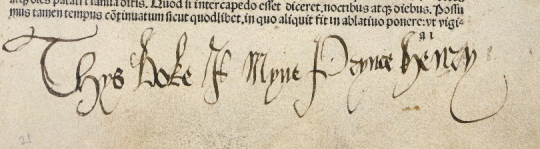
One time Henry VIII had a book when he was little and he wrote in really massive writing on the first page “this boke is myne” and I just find it so funny because that’s such a child Henry VIII thing to do


 Meg's Mumbles