arcadiaego:

teawithsgtbarnes:

What they took from Flint…

I’m listening to Toby’s interview on FD and what he has to say about Flint/McGraw’s brilliance, leadership and ability as a Naval officer and the potential high racking career for a man from a humble background that was also stripped from him.

And it has me feeling that although Thomas was his truest love, we do a great disservice to Flint/McGraw as a character when we reduced his trauma, loss and motivation to only his sexuality.

#it’s like he was killed#all that made up his life was destroyed or taken from him#and he filled the space where everything that made him james mcgraw used to be with flint#no wonder he got consumed by what was supposed to just be a temporary persona#ugh#somebody give that man a hug#james flint#black sails via @la-vie-en-lys

pirateshelly:

It’s funny how often when I see people watching black sails for the first time without spoilers their assumption is that from the start of season 3 the plot trajectory is going to be Flint’s ~descent into villainy~. And I understand making that assumption because that’s kind of what you expect from seemingly dark and gritty fiction, but thank god that’s not the kind of story it is. Like, imagine how boring that would have been? 

The start of season 3 is arguably Flint’s lowest point, but then he reemerges from that and grows past it. It’s not a gradual build up to some terrible and unforgivable act of villainy that would solidify his place as the terrifying monster spoken about in treasure island. It’s not actually the origin story of a villain, it’s the origin of a story of a villain; a person who against all odds wants to believe in the possibility of a better world vs. the monster the world says that he is.

I will never be over how, against all expectations and assumptions (and terrible misleading advertising), this show managed to be so human and so subtly but profoundly optimistic. And it exasperates me so much that some people watch through to the end and STILL somehow manage to find the most blandly cynical interpretations of it (Flint was just an egomaniac who needed to be stopped, Silver murdered him and the ending wasn’t real etc.) and act like it’s actually the sort of story that it’s really just deconstructing.

lesbianwaves:

hot take, but I always come back to this: there’s a lot of things in black sails that can mean a lot (and to me make this show the transcendent revolutionary work of art it is) that a lot of people love to pretend mean nothing because that way silver isn’t as much of a dick

Senate Votes to Save Net Neutrality, Proving Shame Still Works Sometimes

ink-phoenix:

thunderboltsortofapenny:

aniseandspearmint:

deadcatwithaflamethrower:

YESSSSSSSSSSSSSSS!!  YES YES YES YES YES YES YES YES.

Oh thank god

Now everyone prep for the inevitable re-try in a few months or a year

Know this, the House will not vote on this. The only way the House will vote is if the Republicans and Paul Ryan no longer hold majority in the House. They ONLY WAY THAT HAPPENS is if they are voted out in November. The earliest we can repeal the FCC ruling is in January 2019. Get registered. Go vote.

^^^ This. Read the fine print. This is a victory but the war is far from over. REGISTER TO VOTE. get your friends registered. Vote in November. It’s the only way.

Senate Votes to Save Net Neutrality, Proving Shame Still Works Sometimes

fernstrike:

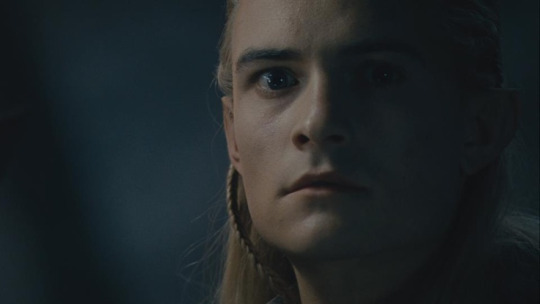
I need to talk about this for a second.

image

This is right after Gandalf says, “A balrog. A demon of the ancient world.”

I just love how PJ chose to cut to Legolas’ face because he is exactly who you should cut to at this moment. You need an elf to show what it really means. Other than Gandalf, the rest of the Fellowship can sense something is gravely wrong, but they don’t understand just how grave. Like Gandalf, Legolas knows the terror. He understands the gravity of what lies around that corner. He’s got a piddly little bow and he is mere steps away from a demon of the ancient world. This frame shows a kid coming to the realisation that he is way out of his depth, that this mission will take him to places he only knew to exist in legends of the Elder Days, a time long gone, barely history. 

He’s probably one of the youngest elves in Middle Earth at this point. He probably grew up on stories of the balrogs, slaying the ancient High Kings of the Eldar and tearing Middle Earth apart, thousands and thousands of years ago. They are legends in old crumbling books, read illicitly by a little elfling who was kept up at night by the terrible tales.They are the monsters under the bed and the shadows in the heart of the forest. They are the beasts behind the winged hordes of hell, that older elves, who’ve seen the worst that Arda has to offer, always assured him were no more than distant nightmares, stories relegated to dust and ancient memory. Except now they are real. They are here. They are coming.

pirateshelly:

Not to get involved in ~discourse~, but I really feel like this idea i keep seeing that Flint “just needed to be stopped”, and that Silver did The Right Thing by stopping him just kind of reduces the complexity of the ending, reduces the complexity of both of their characters, and ignores Madi’s role and agency. Like, Silver’s whole reason for wanting to stop Flint was that “his” war would put Madi at risk, ignoring the fact that Madi has as much at stake in this revolution as anyone. She wasn’t hypnotized or tricked by Flint into joining his revolution, she knew damn well what she was getting into and what dangers it posed, so to say that she needed to be saved from herself or saved from Flint’s dangerous influence just irks me. 

But also, I think saying Flint and his revolution (and by extension Madi because, like I said, it was as much her fight as it was his, if not more her fight) were misguided and doomed to failure ignores the fascinating “what if” that black sails presents. What if, leaving aside for a moment what we as an audience know of history, a revolution like this did happen and did succeed? What world the world look like if that happened? Are abusive power structures really inevitable? Is the certainty of security in the moment worth the certainty that that security won’t last? As Madi’s mother points out, building a wall and protecting who you can isn’t a lasting solution, eventually the outside world will find a way in. Is the uncertain possibility of a better future worth chaos and instability in the moment? If you drown the cat that just wants to eat and put an end to the immediate conflict, the abusive father is still there. It’s only a matter of time before something else comes along to provoke him. To me Black Sails does have a tragic ending, but it’s a subtle kind of tragedy rather than a doom/disaster/everybody dies kind of tragedy. It’s tragic because of that lingering “what if” that will probably continue to haunt all of the characters for the rest of their lives.

pirateshelly:

Am I the only one who finds Max’s line about drowning the cat in 4.07 way more of a depressing moment than an empowering moment? Like, partially for cat person “please don’t drown any literal or metaphorical cats” reasons. Partially because it’s obvious in the story itself that the true source of the problem is the abusive father (who in this metaphor seems to represent the abusive patriarchal power structures of England/civilization); the son is just being kind, the cat just wants to eat and the mother just wants to protect her child. The father is the root cause, he’s the one beating the child for being kind and kicking the cat for simply wanting to eat. And killing the cat only means pacifying and delaying his anger until someone else steps out of line and provokes him. It doesn’t actually solve the problem… But of course the tragedy is that none of these characters are people given the kind of power within the law to truly stop a man like that and everything he represents without violence (and in the story itself what choices did Marion Guthrie really have? Divorce him? Murder him?), so the cat is sacrificed to gain temporary peace.

But it’s also just depressing because when I first watched that scene, while the cat can be a metaphor for a lot of characters/things (the most obvious being Flint), the description of that cat as something hungry, in the dark, on the outside looking in, immediately made me think of Max’s story of herself as a child in that exact position. It just felt like her sort of denying and trying to cut away this more vulnerable side of herself in order to be “on the inside”. 

The scene with her and Anne in the snow (where they’re both outside in the dark, compared to the earlier scene where she’s in a parlor) kind of feels like a response to that though, like Max stepping back and realizing that denying that part of herself isn’t worth it. That the hungry child in the dark is always going to be a part of her.

Anyway, that cat story is one of the most interesting scenes in the show to me, because it just parallels sooo many scenarios throughout the series. The idea of this powerful and seemingly inevitable force all of the characters are faced with that punishes anyone “on the outside” who simply wants what everyone on the inside is just given, and that punishes anyone on the inside who would try to help them. And “drowning the cat” just seems like such a bitter and cynical and impermanent solution, and I never got the impression that writers wanted to present it as something perfectly positive? But there isn’t really a completely good solution either, as satisfying as “murder the abusive dad” sounds.

captainsnoop:

i feel like people have forgotten what “NSFW” actually stands for after all these years

it stands for “not safe for work,” as in “material that could get you fired if your boss sees you looking at it at your place of employment” 

tagging things as “nsfw” is not something to be politicized, it is a courtesy to your fellow humans so that they do not get fired or socially ostracized for someone’s whole dick being out on their computer