Chapters: 1/1 Fandom: Black Sails Rating: Mature Warnings: No Archive Warnings Apply Relationships: Hal Gates/Admiral Hennessey Characters: Hal Gates, Admiral Hennessey (Black Sails) Additional Tags: part of the With the Gold Dawn’s Breaking verse, Hennessey and Gates have been apart a long time, they deserve to get to reconnect, Gates is Avery, and Hennessey knows it, definitely NSFW Series: Part 2 of Journey’s End Summary:
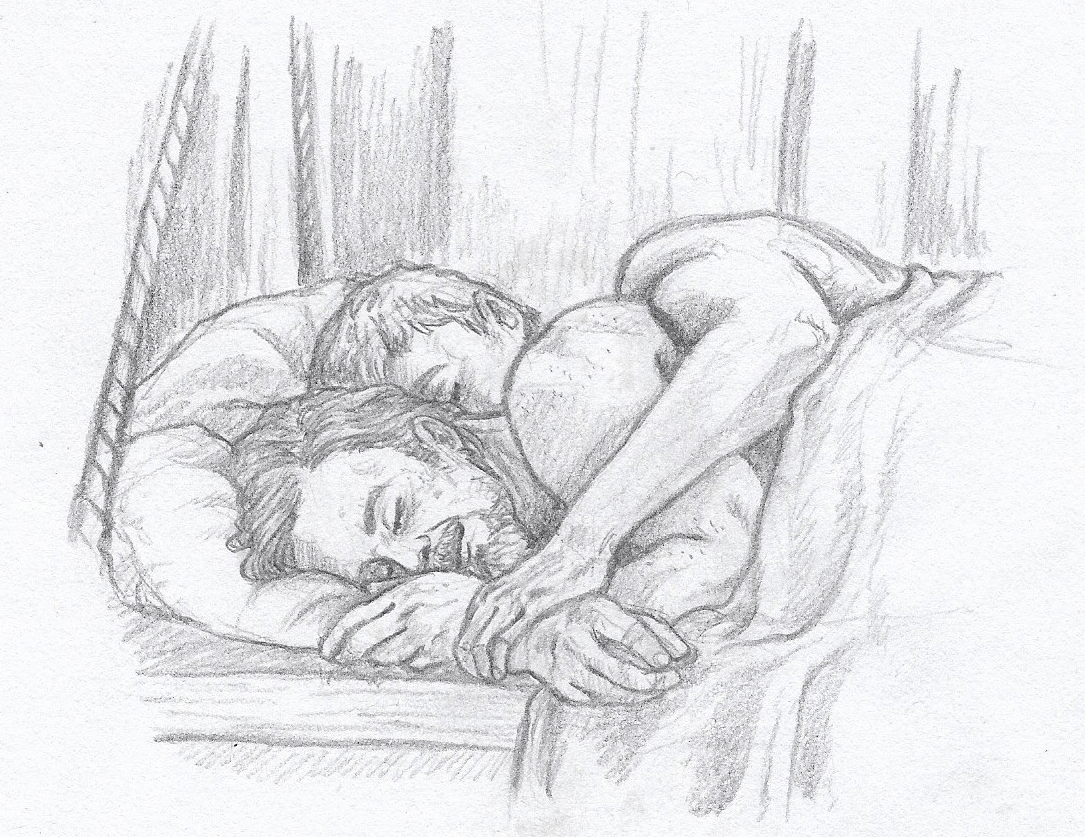
Gates and Hennessey are reunited and proceed to make use of the officers’ quarters in the warship. Extra scene for With the Gold Dawn’s Breaking.
2/To add to my previous ask, I never actually read any of the writers interviews after watching the finale, mostly because I just wanted to sit with my own thoughts and feelings about it and I’m generally a fan of death of the author, so my vague idea of what they have said is largely out of context quotes from people on tumblr. Right after I watched the finale it didn’t actually occur to me that the plantation could be interpreted as anything but completely awful
Honestly – I think the writers did something… not very subtle at all with the end of the show and the plantation and I think that what I have a problem with is not what they wrote but with the way that people didn’t really dig into what’s there in the show. I haven’t read too many creator interviews because I’m very much of the school where the author is dead and what is in the show is what I spend my time on. Anything else is just too exhausting, and having come to Black Sails from the Tolkien fandom, I’ve learned my lesson about “well Tolkien said this,” because let me tell you that man contradicted himself a lot. So – bottom line, I see the plantation as a negative that is being painted as a positive by two people in the show who have very, very good reasons to lie to themselves about what they’re doing to other people. We hear that the plantation is a place where people are sent to be taken care of from Max, and we hear from Silver that it’s a place where people go to disappear.
Unfortunately, in both of these cases, we’re also presented with the knowledge that the person speaking is speaking to someone they need to have on their side. Max is speaking to Silver, who has her as a captive in an upstairs room of the tavern. She can’t afford to tell him that she was planning on seeing him enslaved as the perceived lesser of two evils because who sits there and hears that and doesn’t get furious at the person who planned to do that to them? She also needs to believe, for her own peace of mind, that she WAS choosing the lesser evil, I think. I think Silver needs that same belief so he can live with himself at the end of the story, and I think that Madi is there specifically for us to see the hypocrisy of the story that both Silver and Max are telling themselves. It’s the ultimate callout, really – Silver is standing there telling his BLACK FORMER SLAVE girlfriend that he sold her friend, essentially, and then asking her to believe him when he says that he did right. We also have the metaphor about strangling the cat earlier in the show, and I think we’re meant to see that analogy in use with the plantation, and see the horror of both situations. In a just world, the cat would not get strangled. The abusive bastard husband who is beating his child for being kind would be the one punished. Similarly, in James’ case, in a just world, he would not be punished for effectively yowling at the door – for fighting for a better world. Instead, the institution that created the problem he’s fighting should be torn down, but instead, Silver elects to strangle the cat as the simplest way to make what he sees as an untenable situation stop without any real justice. I think what the writers put out there is pretty clear – the plantation is not a good place. It’s not a just place. It’s a solution – but not a good one or a pretty one (in fact it’s what I’d call a fucking disgusting one). Look at the way they say that there’s tragedy to what’s been done at the end of the show – they’re saying that what happens to James and Thomas isn’t right, and I have to agree with them. It isn’t.
I’ve had so many completely amorphous, disorganised thoughts about Billy recently. He had two pivotal moments in his life that defined him going forward, both involving the choice to engage in acts of violent revenge. The first leads him to believe he’s unredeemable in his father’s eyes, yet he never seems to contemplate how his outrage at the lack of loyalty and respect he receives when plying his father’s trade might make him more of a disappointment as a son than murder. It makes me wonder if Billy was every moral—if he ever truly cared about fighting imperialism—or if he was more driven by anger over being denied personal respect. On one hand, he does make lots of comments about his brothers and communal safety, but then he abandons those ideals as soon as they community fails to respect his choices. This certainly jives well with the Billy we see in Treasure Island, as a bitter drunkard revelling in his past glory, though the novel also implies that Billy has been rolling with Silver and co. for years—until stealing map after Savannah, which is hard to picture given what happens between Billy, Silver, and Madi.
I don’t know, none of these observations have a point, it’s just been sticking with me a lot lately.
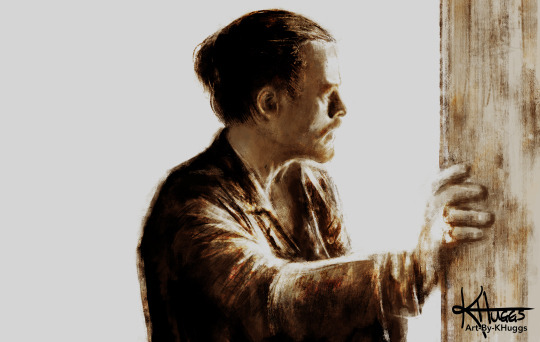
It’s funny how often when I see people watching black sails for the first time without spoilers their assumption is that from the start of season 3 the plot trajectory is going to be Flint’s ~descent into villainy~. And I understand making that assumption because that’s kind of what you expect from seemingly dark and gritty fiction, but thank god that’s not the kind of story it is. Like, imagine how boring that would have been?
The start of season 3 is arguably Flint’s lowest point, but then he reemerges from that and grows past it. It’s not a gradual build up to some terrible and unforgivable act of villainy that would solidify his place as the terrifying monster spoken about in treasure island. It’s not actually the origin story of a villain, it’s the origin of a story of a villain; a person who against all odds wants to believe in the possibility of a better world vs. the monster the world says that he is.
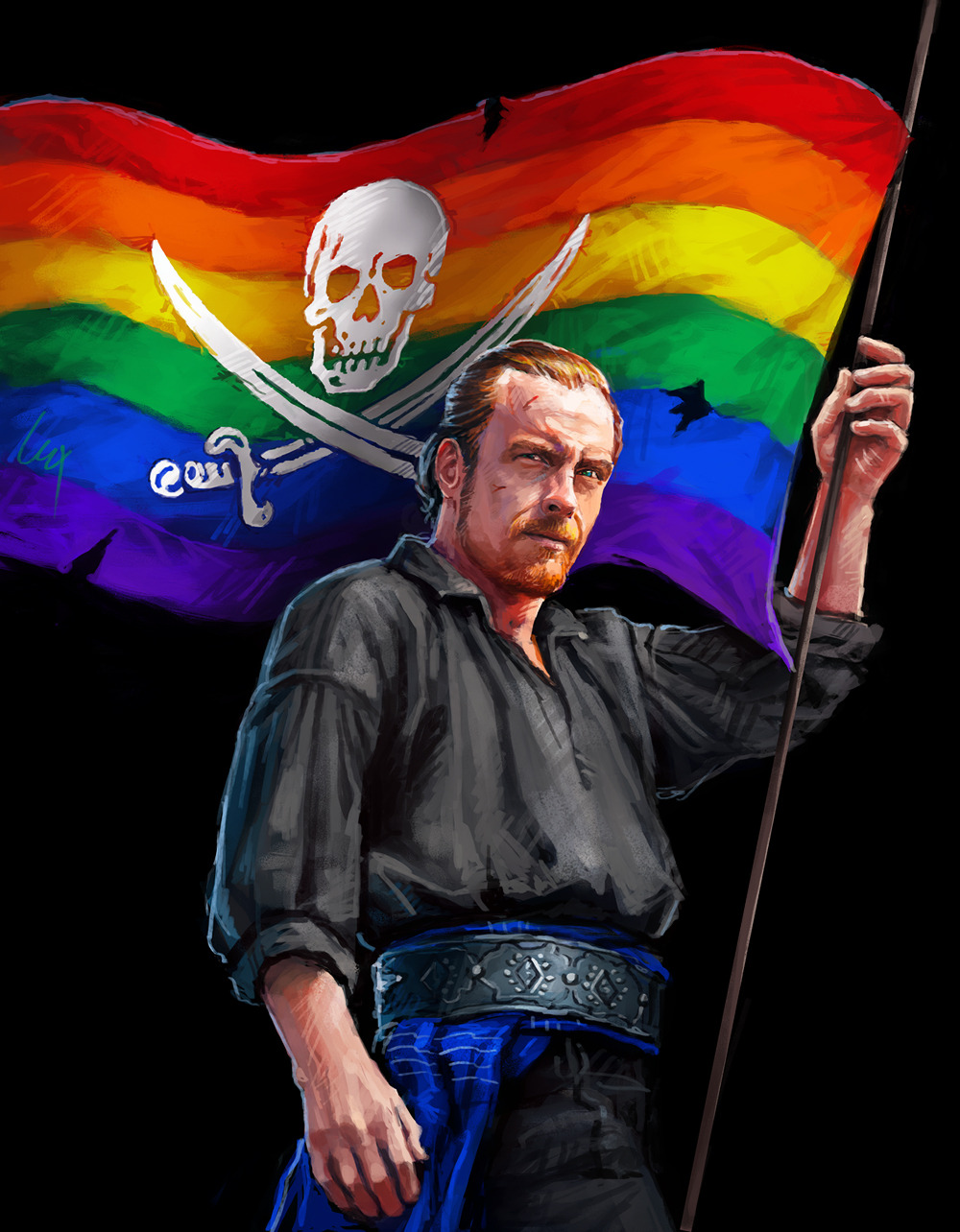
I will never be over how, against all expectations and assumptions (and terrible misleading advertising), this show managed to be so human and so subtly but profoundly optimistic. And it exasperates me so much that some people watch through to the end and STILL somehow manage to find the most blandly cynical interpretations of it (Flint was just an egomaniac who needed to be stopped, Silver murdered him and the ending wasn’t real etc.) and act like it’s actually the sort of story that it’s really just deconstructing.

















 Meg's Mumbles