my favorite Millennial Thing™ is when a group of us are standing around and talking and someone asks a question that no one knows the answer to and suddenly it’s a race to get out your phone and google it and be the first to know, and then someone starts reading the Wikipedia article about the thing aloud to everyone else, and what started as a casual conversation is now A Learning Opportunity and we all walk away a little more knowledgeable about a random topic
Like, Boomers hate when we do that, but I think it’s one of the best things about us.
So long as we have internet or a cell signal, all of the world’s collective knowledge is at our fingertips, and damned if we aren’t going to use it.
#SaveTheExorcist 5/23: AMAZON PRIME TWEETATHON & SOCIAL CAMPAIGN
IT’S TIME FOR WEEK TWO: AMAZON!
This needs to be our BIGGEST initiative yet! Amazon Prime is our biggest shot at renewing The Exorcist—since Sean Crouch is working closely with the streaming service due to his involvement with Lore. It’s likely Sean has pitched the show to Prime or will soon, so it’s up to us to show that there’s real buy-in for it!
Rules are the same as last time. Between 5pm and 7pm on Wednesday, May 23rd, you can do any—or all—of the following:
Tweet @PrimeVideo (using TWO HASHTAGS ONLY: #SaveTheExorcist and #PrimeSaveTheExorcist. If you use more than that, your Tweet will be marked as spam). Make sure you TAG their Twitter account in each Tweet.
Write on Prime’s Facebook wall using the same hashtags.
Contact Amazon Prime via email/customer service.
Participate in The Exorcist Twitter game, pioneered by @cutiesonthehorizon. It’s a series of questions about the show where you can talk about your favorite aspects of it all while tagging Prime and using hashtags.
In your messages, focus on the following:
The Exorcist has a large horror fan base, so those who watch Lore would love the show and vice versa—bringing on high-quality horror is good for their brand
Speak to the show’s diversity, as you did with Hulu, illustrating that taking on The Exorcist would be great to show a commitment to diversity
here’s the last of my coffeehouse-related information:
I have learned that the City of London
(not to be confused with the lowercase city of London) is divided into
wards, and two of the wards are called Farringdon Within and Farringdon
Without. This has no major relevance to the coffeehouse history I’m
currently relaying. Just, I didn’t want to let that pass without
comment. Anyway, the highest concentration of coffeehouses with in the
Farringdon Within and Broad Street wards.
Different coffeehouses had different clientele – one might be the particular haunt of Scots, one
of doctors and physicians, one of Jacobites, etc. – though these
distinctions weren’t quite so rigid at places outside of London. But
there were definitely coffeehouses for Whigs and other ones for Tories,
and governments had perpetual anxiety about political unrest being fomented in these places. By, like, rabble.
In
addition to being places for debate, coffeehouses had ads and
news items posted on their walls, and people would sell news to and buy
news from coffeehouses – for instance, a House of Commons clerk might
sell news of what happened in Parliament that day, and the coffeeman
would distribute it to his clientele in printed or verbal formats. In
more official news sources, coffeehouses had to subscribe to lots of
local papers in order to have them available for patrons; if they failed
to do this (and it was expensive!), they would lose clientele.
(Incidentally, the politician Robert Harley – who under Queen Anne was kind of an ur-prime minister before the office of prime minister actually existed – had the idea to make use of the coffeehouses. He recruited people like Daniel Defoe and Jonathan Swift to run periodicals that could serve as the mouthpiece of the government to the public. Basically they’d frame the news in the way the government wanted it to be framed! His agents also arranged for coffeehouses to get excellent rates on government-approved newspapers, which helped to ensure that they’d be in stock at all the important coffeehouses. THANKS FOR THE PROPAGANDA, GUYS.)
Regulars
at coffeehouses could also ask the proprietors to accept mail for them.
The proprietors did this basically for free and as
a favor. In the middle-late 1600s, when specie was in short supply,
coffeehouses would issue adorable lil tokens with their logo on that you
could redeem at the premises. This was very illegal, and the practice
basically died out (at least for coffeehouses) by the end of the
seventeenth century.
no fucking lie, William of William-and-Mary was prone to prosecuting coffeemen and their patrons for uttering and spreading, AND I QUOTE, “false news”
Weirdly, coffeehouses and pirate ships were both loci for Jacobite sentiment in the years following the Glorious Revolution. I don’t really have any conclusions to draw from that; it is just a fact.
good God if I am going to do this much research then it might as well benefit the rest of the Black Sails fandom, so here’s a post about 18th-century coffeehouses and what went on at them and what people drank and stuff. This is going to be a multi-part post because it is a whole book’s worth of information.
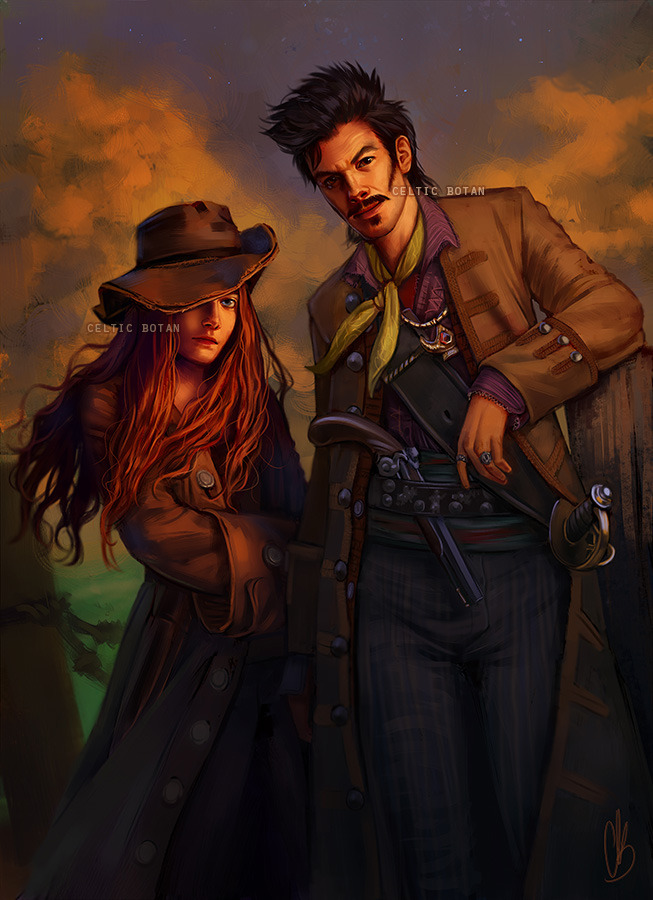
it is my brand new headcanon just formed this instant while reading this one book about libraries in the Atlantic world that Miranda and Thomas, in addition to doing salons like the big old rhetoric nerds that they are, were regulars at London coffeehouses
This is all coming from The Social Life of Coffee: The Emergence of the British Coffeehouse by Brian Cowan (Yale UP, 2005), which is excellent. I skipped the bits about coffee and commerce because I didn’t care, but hmu if you have questions about that side of things and I will try to find out the answers. Putting this under a cut bc it’s going to be long.
I shall invent a coffeehouse that I have not yet named but it will be run by a single lady with a teenage son and she will be Miranda’s pal because poor Miranda, I want her to have some friends in old-time London. And also that my book says occasionally coffeehouses were run by single ladies. All the information is under the cut.
Drinks you could get:
weak coffee (or mixed with milk to make “milk coffee”) (also this was made with Thames water so try not to think about that too hard)
tea
chocolate drinks (sometimes mixed with eggs, sugar, milk, or a bit of bread, ew)
chocolate with flour in for “breakfast chocolate” (ew)
chocolate with wine in (ew)
sage tea
“content” which was mainly milk and eggs (seriously ew, wtf England)
ratesia (“a drink fortified with brandy”, no further information given)
also alcohols: “mum, mead, metheglin, cider, perry, usquebaugh, brandy, aqua vitae, strong-waters, beer, and ale”
Hours: as early as 6AM to as late as 9 or 10 PM. There were laws against places staying open much later than this, but of course some people flouted that. Still, coffeehouses that were open later than 9 or 10 were suspect in terms of propriety.
Pretty early on in the life of London coffeehouses, there would be clubs that met there regularly for vigorous intellectual debate. The Rota was an early such club; Samuel Pepys paid one and six to be a member. An estimated forty percent of former Rota-men went on to become fellows of the Royal Society. Though the Rota club didn’t last super long, people really remembered it (and made fun of its armchair philosophers), and it established a pattern for coffeehouses as a site of intellectual debate.
Unlike a lot of other places you could go to socialize (like taverns), coffeehouses lacked the association with various kinds of sins. The idea was that men of widely different social status could come and exchange ideas and hang out on relatively equal terms. It was cheap and convenient!
By the 1690s, there were separate chocolate houses. These were posher than coffeehouses. IDK why.
Many coffeehouses acknowledged the Turkish origin of the drink and would have names like The Turk’s Head or The Sultan’s Head or Murad the Great. They were prone to employing vaguely orientalist decorating patterns.
Coffeehouses were Ground Zero for auctions in England. Who the hell knew! Book and art auctions were particularly popular, as well as auctions for rare manuscripts and curios from faraway countries. Will’s Coffeehouse in Westminster was so well known for auctions that it changed its name to the Auction House in 1691. One satire that occurred in pamphlets in the seventeenth century (though it stopped by the eighteenth) was that bachelors and women were being auctioned off. A lot of people found this extremely unamusing; the Athenian Mercury (run by a guy who looooooved the Society for the Reformation of Manners) said “‘Tis a teaguish sort of witticism to dispose of what’s another bodies, without their consent.” TRUE.









 Meg's Mumbles